As a leading provider of Light Therapy for Autism Spectrum Disorders at our Therapeutic Laser clinic in London, we are often asked if Light Therapy for ASD really works? In general, we find that Light Therapy often really does help alleviate ASD symptoms and can actively support the neurodevelopment of children with Autism Spectrum Disorders. This article helps to explain why this may be the case, how we combine laser Therapy with the Melillo Method, and the steps parents can take to optimise the effect of Light Therapy for children with ASD.
What parents tell us after their children have taken a course of Laser Therapy for Autism
In most cases (sadly not all, and there are no guarantees) Laser Therapy for ASD really helps with symptomatic behaviour and the functional development of the child. This is supported by various clinical studies, and what we see in the clinic with our very own eyes.
Using clinical studies as a guide for our Laser Protocols, and combining Laser Therapy with Primitive Reflex integration, we normally see significant improvements in the child’s behaviour within 6-10 sessions at the clinic. Here are where we see improvements and what the parents say:
- The child becomes calmer and less hyperactive.
- They focus more on tasks.
- Self harming behaviour and melt-downs become less frequent and often disappear.
- The child sleeps better.
- Their digestion improves and they become less constipated.
- The child starts to use words in a more meaningful way and puts sentences together.
- Hyper-sensitivity calms down.
- They become stronger physically.
- The child is calmer and more focused in the classroom.
- They start to interact with their siblings and other children and become more sociable.
How does Light Therapy for Autism work?
Light Therapy works through a process of Photobiomodulation. As specific light wavelengths are applied to the head and key areas of the body, a biological stream of events creates an anti-inflammatory effect, not only within the brain but throughout the child’s entire system. This biological process improves blood circulation to significantly raise oxygen levels and mitochondrial cellular energy. Reduced inflammation, increased oxygenated blood flow and an uplift in mitochondrial energy supports neuroplasticity so that delayed parts of the brain can catch up more quickly. Furthermore, at our clinic we also engage the use of Hyperbaric Oxygen Therapy (HBOT) and Vibration Therapy to further optimise the effect of Light Therapy.
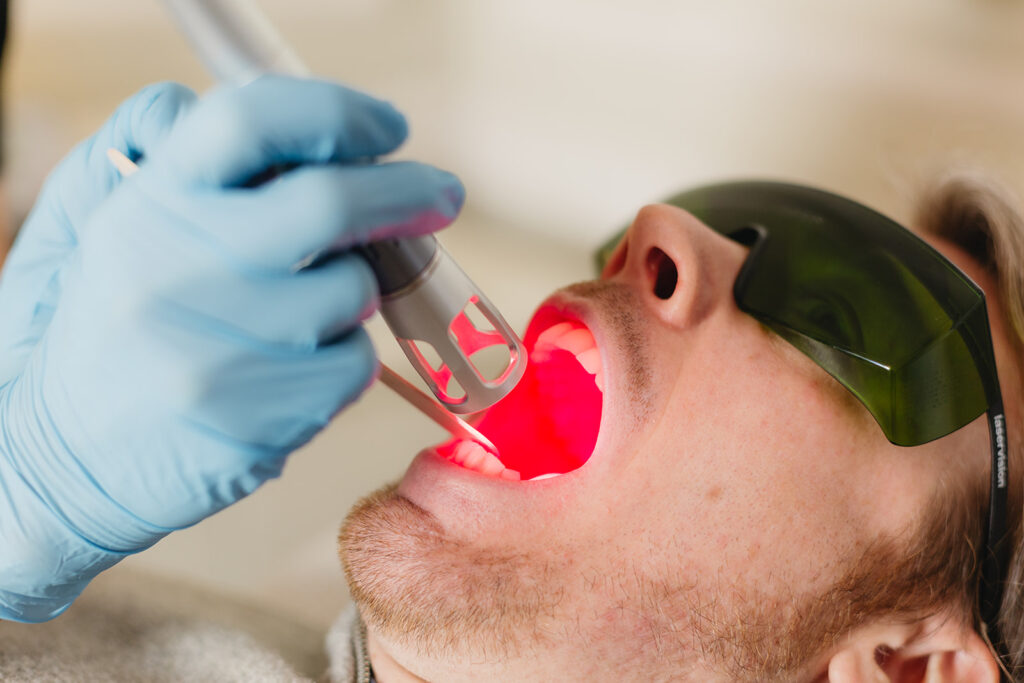
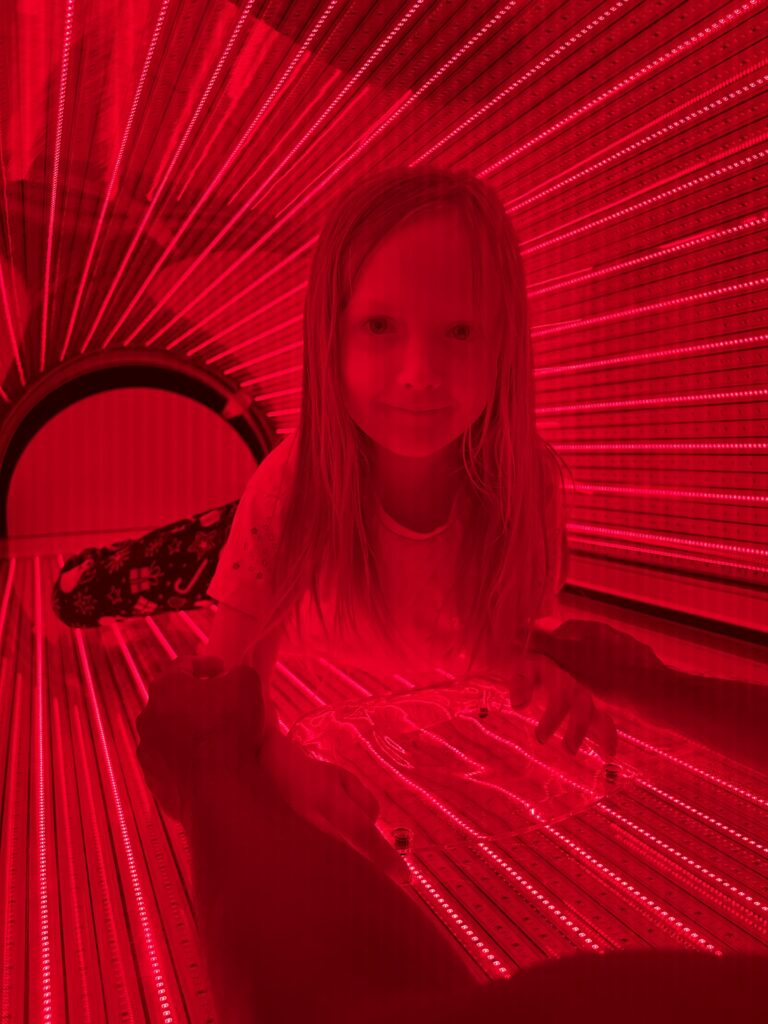
The Light Therapy for ASD programme involves applying light wavelengths in the infra-red and near infrared range of light not only to the child’s head but to their entire system. We do this using a combination of hand held light therapy equipment and full body light therapy equipment as appropriate. In most cases (not all, and there are no guarantees) after a course of 10 therapy sessions, we generally see significant improvements in the child’s symptoms and functional development, most obviously reported after 6 sessions.
We work with the best Light Therapy equipment available, and we have many years of experience working not only with autism spectrum disorders but with brain health more broadly, such as traumatic brain injuries, stroke recovery, anoxic events at childbirth and in the womb, genetic and degenerative conditions. Our powerful range of medical Therapeutic Laser equipment means that we can tailor our Light Therapy for Autism protocols to each child, in a comfortable and safe environment.
What helps the programme become most effective
Nutrition
Children with ASD generally have less resilience to environmental conditions including what they eat. We see far greater improvements during the course of Laser Therapy treatments when the child’s diet is cleared of inflammatory ingredients found in processed food. Laser Therapy is able to work more effectively when sugar, gluten and dairy are removed from the diet. This is because sugar and gluten create systemic inflammation (this is true for all of us) and rapid increases and falls in blood sugar levels. Dairy may also create issues for ASD not necessary from a lactose intolerance point of view but because of the ultra processing in its production and its effect on the immune system.
What the child should eat
A simple and nutritious diet of meat, fish, vegetables, legumes, low sugar fruits such as berries and apples, nuts, nut butters and seeds, works in harmony with the Light Therapy. Laser Therapy has been studied to show an improvement in gut microbiome, and this effect is optimised if the diet is supported with food that also impacts positively on gut microbiome.
What the child should not eat
It’s important to cut out all ultra processed food (most food in packets has added sugar and gluten) including things like crisps, biscuits, bread sticks, crackers etc. It is incredible to see how removing processed foods, sugar and gluten reduces inflammation in the gut, improves the gut microbiome and creates a more favourable environment for the child’s brain to develop.
Reducing / removing screens, tech and mobile phones
It is very telling when you hear that the people responsible for companies that develop games, videos, software for phones etc, will not let their own children any near it until they are 18 years old. They send their children to schools where there is no tech in the classrooms, and the people who look after their children are forbidden to let the child see a mobile phone. The reason is that they know exactly how addictive the programs are designed to be.
Addiction disrupts neurotransmitters in the brain such as Dopamine and Gaba and causes a subsequent imbalance in brain development. Over use of tech affects everyone – adults included – however the developed adult brain has more resilience coping with the way in which we consume media. That said, there is a growing body of evidence to show how damaging social media, video games and short form video are for everyone. But let’s all agree – it’s more damaging for the child’s developing brain than anyone.
Turn your own phones and tech to grayscale mode so they become completely unappealing to your child – and give them normal books and occasional TV – focussing on long films with stories and character development to help their brains grow properly.
Primitive Reflex and Strength Training
Children with ASD typically retain various Primitive Reflexes and lack core strength (Melillo Method therapy focuses mostly on this). Many neurodevelopment specialists emphasise the importance of integrating the primitive reflexes and developing core strength to have a positive impact on brain development. We focus on exercises taught as part of the Melillo Method for Functional Neurodevelopment and we introduce the exercises gradually as part of our ASD Therapy Programme.
Our Autism Programme
Session 1: Assessment and Light Therapy treatment
In the first session we assess the child using Melillo Method primitive reflex and brain hemisphere testing techniques, which help us to establish the level of developmental delay and areas of the brain which are more delayed and disconnected. We then apply Light Therapy for ASD protocols based on our assessment, monitoring the child’s level of comfort and ease. We make the session easy and fun. We don’t believe in traumatic experiences – we want you to come back!
We combine Light Therapy with physical exercises and sensory stimulation to help the Light Therapy achieve optimum results. We also show parents how to help release and integrate primitive reflexes through simple exercises carried out in the clinic and at home.
Sessions 2 to 11: Regular Therapy sessions
The course of sessions can be taken 1 or 2 or 3 times a week for 10 sessions in total. We will advise on the most appropriate frequency of sessions depending on the child. We generally see an improvement in behaviour after 6 sessions (often earlier) with the final 4 sessions consolidating the progress.
Laser Medicine Light Therapy for ASD fees
- First assessment and therapy session: £390.
- 10 further sessions to be taken 1-3 times per week: £3,000 (made in 2 separate payments).
Light Therapy at home
In addition to clinical Light Therapy and Melillo Method protocols during in-clinic sessions we often recommend the daily use of the Abdomen PBM Irradiator at home, to help sustain gut health. The PBM Irradiator can also be used to support the child’s brain health while they are sleeping. We provide full guidance on the best use for optimum results.
Please read more about our Photobiomodulation Therapy for Autism Service.
If you would like to discuss our service please Contact us to discuss how we may help.
Clinical Studies in Light Therapy for ASD
Clinical Studies: Light Therapy for Autism
Clinical studies indicating the effectiveness of photobiomodulation therapy for autism are available to read below:
Transcranial photobiomodulation in children aged 2–6 years: a randomized sham-controlled clinical trial assessing safety, efficacy, and impact on autism spectrum disorder symptoms and brain electrophysiology (Fradkin et al. 2024).
Transcranial photobiomodulation for reducing symptoms of autism spectrum disorder and modulating brain electrophysiology in children aged 2–7: an open label study (Fradkin et al. 2025).
Transcranial Photobiomodulation for the Treatment of Children with Autism Spectrum Disorder (ASD): A Retrospective Study (Pallanti et al. 2022).
Transcranial Photobiomodulation in Adults with High Functioning Autism (Ceranoglu et al. 2022).
Effects of Low-Level Laser Therapy in Autism Spectrum Disorder (Leisman et al. 2018).
Follow-Up Assessment of Autistic Children 6 Months After Finishing Low Level Laser Therapy (Machado et al 2019).
Lights on for Autism: Exploring Photobiomodulation as an Effective Therapeutic Option (Hamilton et al. 2022).
Clinical Studies: Light Therapy for Autism and ADHD
Clinical studies indicating the effectiveness of laser therapy for ADHD are available to read below:
Repetitive transcranial photobiomodulation improves working memory and attention in adults with ADHD: a 4-week follow-up study (Lai et al 2025).
Efficacy of Photobiomodulation for Attention Deficit Hyperactivity Disorder (ADHD): Case Studies (Stephan et al. 2022).
Clinical studies: Light Therapy for gut microbiome
Clinical studies to support the gut-brain-microbiota connection and the efficacy of photobiomodulation therapy for gut microbiome and digestive function:
The Gut–Brain–Microbiota Connection and Its Role in Autism Spectrum Disorders (Mlynarska et al. 2025).
“Photobiomics”: Can Light, Including Photobiomodulation, Alter the Microbiome? (Liebert et al. 2019).
Photobiomodulation of the microbiome: implications for metabolic and inflammatory diseases (Bicknell et al. 2019).
Clinical Studies: Melillo Method
QEEG Spectral and Coherence Assessment of Autistic Children in Three Different Experimental Conditions (Machado et al. 2015).
Autistic spectrum disorders as functional disconnection syndrome (Melillo and Leisman 2009).
Front and center: Maturational dysregulation of frontal lobe functional neuroanatomic connections in attention deficit hyperactivity disorder (Leisman and Melillo 2022).
Cognitive-motor interactions of the basal ganglia in development (Leisman et al. 2014).
Taking Sides: Asymmetries in the Evolution of Human Brain Development in Better Understanding Autism Spectrum Disorder (Leisman et al. 2022).
Prefrontal functional connectivities in autism spectrum disorders: A connectopathic disorder affecting movement, interoception, and cognition (Leisman and Melillo 2023).
Persistent Childhood Primitive Reflex Reduction Effects on Cognitive, Sensorimotor, and Academic Performance in ADHD (Melillo et al 2020).
Retained Primitive Reflexes and Potential for Intervention in Autistic Spectrum Disorders (Melillo et al. 2022).